Table of Contents
- What Separates the Best Bin Cleaning Services in San Diego
- Trash Can Cleaning Cost: What Drives the Price
- How Often to Clean Trash Bins in San Diego
- Bin Cleaning Service Plans: One-Time, Quarterly, and Monthly
- Trash Can Odor Removal and Disinfection That Lasts
- Residential and Commercial Bin Cleaning in San Diego County
- How to Compare and Book a Local Provider
- Frequently Asked Questions
Last Updated: October 8, 2026
What Separates the Best Bin Cleaning Services in San Diego
Most homeowners never think about their trash bins until the smell becomes impossible to ignore. By then, bacteria have had weeks to multiply, maggots may have moved in, and that corner of the garage has become a no-go zone.
Bin cleaning services are professional waste-container sanitation programs that use high-pressure washing, hot water, and disinfecting agents to remove grime, bacteria, and odor from trash, recycling, and green waste bins.
Here’s the part most people miss: curb appeal and pest control start at the bin, not the front door.
Most guides list providers and stop there. We’ll go further, covering the cleaning methods, wastewater handling, and plan details that actually determine whether your bins come back spotless or just less bad.
Trash Can Cleaning Cost: What Drives the Price
Trash can cleaning cost depends on how many bins you have, how often you want them serviced, and whether the provider uses a specialized cleaning truck or handheld equipment. Because every household’s bin count and schedule differ, most providers quote per bin rather than a flat rate.
Commercial or HOA accounts with dumpster-sized containers cost more because they require more water, more time, and heavier equipment.
How to Estimate Your Own Per-Bin Rate
Instead of chasing a single advertised number, build an estimate from the variables providers actually use. Most quotes in this market are assembled from four line items:
| Line Item | What It Reflects | How to Ask About It |
|---|---|---|
| Base per-bin rate | One bin, one visit, standard size (up to 96 gallons) | “What is your rate for a single 96-gallon cart?” |
| Multi-bin discount | Second and third bins on the same visit | “Is the second bin the same price, or discounted?” |
| First-clean or initial deep-clean fee | Extra time for a bin that has never been serviced | “Is there a one-time setup or first-clean charge?” |
| Frequency adjustment | Monthly vs. quarterly vs. one-time per-visit rate | “How does the per-visit price change on a monthly plan?” |
A common pattern is that recurring customers pay less per visit than one-time customers.
Why Quotes Vary by Provider
Three factors explain most of the gap between quotes:
- Equipment. A provider running a self-contained cleaning truck with hot water and wastewater capture costs more to operate than someone with a pressure washer and a hose.
- Frequency. Recurring service spreads the provider’s route costs, so monthly and quarterly plans usually cost less per visit than one-time cleaning.
- Add-ons. Deodorizing, disinfecting, and odor control treatments may be bundled or billed separately.
What to Confirm Before You Pay
Because published rates change with bin count, route density, and fuel costs, treat any number you see online as a starting point, not a final quote. Before you commit, confirm four things in writing:
- The per-bin rate for your exact bin sizes, a 32-gallon kitchen cart and a 96-gallon cart are not the same job.
- Whether the first clean costs more than subsequent visits, and why.
- Whether multi-bin discounts apply when all bins are serviced on the same trip.
- Cancellation and pause terms, whether you can skip a month, pause for a season, or cancel without a fee.
Be cautious with any quote that promises “sanitizing” without explaining how wastewater is captured and disposed of. Runoff from bin cleaning can carry bacteria into storm drains, and in many areas that violates local stormwater rules.
For current plan pricing, check SD Stink Stoppers’s website directly.
How Often to Clean Trash Bins in San Diego
The short answer: most households should clean their bins monthly, with quarterly cleaning as the bare minimum. How often to clean trash bins depends on what you put in them and how warm it gets.
Warm weather speeds up bacterial growth and odor. In a coastal climate with mild but sunny summers, food scraps and pet waste break down faster than many homeowners expect, and that’s what draws flies and maggots.
Use this rough schedule:
| Household Situation | Recommended Frequency | Why |
|---|---|---|
| Small household, little food waste | Quarterly | Low organic load, slower odor buildup |
| Family with kids or pets | Monthly | Higher food and pet waste volume |
| Hot-weather months or full sun exposure | Monthly or more | Heat accelerates bacteria and odor |
| HOA or commercial dumpster area | Monthly or more | Shared containers and complaint risk |
If you’ve ever opened a bin and recoiled, you’re already past the quarterly threshold. Recurring service keeps bins from ever reaching that point again.
Bin Cleaning Service Plans: One-Time, Quarterly, and Monthly
Bin cleaning service plans generally fall into three tiers, and the right one depends on how much waste your household generates. Most providers offer a one-time cleaning, a quarterly plan, and a monthly plan, with recurring customers paying less per visit than one-time bookings.
- One-time cleaning: Best for a deep clean before selling a home, after a pest problem, or when you want to test a provider before committing.
- Quarterly plan: A reasonable baseline for small households with light waste volume.
- Monthly plan: The standard choice for families, pet owners, and anyone who has dealt with maggots or persistent odor.
Ask whether the plan locks you into a contract. Reputable providers let you cancel or pause without penalty, which matters if your household size or waste habits change.
SD Stink Stoppers offers flexible quarterly and monthly plans for households of all sizes.
Trash Can Odor Removal and Disinfection That Lasts
Trash can odor removal works only when the source is eliminated, not masked. Odor comes from bacteria breaking down organic waste, so a treatment that kills bacteria at the source lasts far longer than a deodorizing spray.
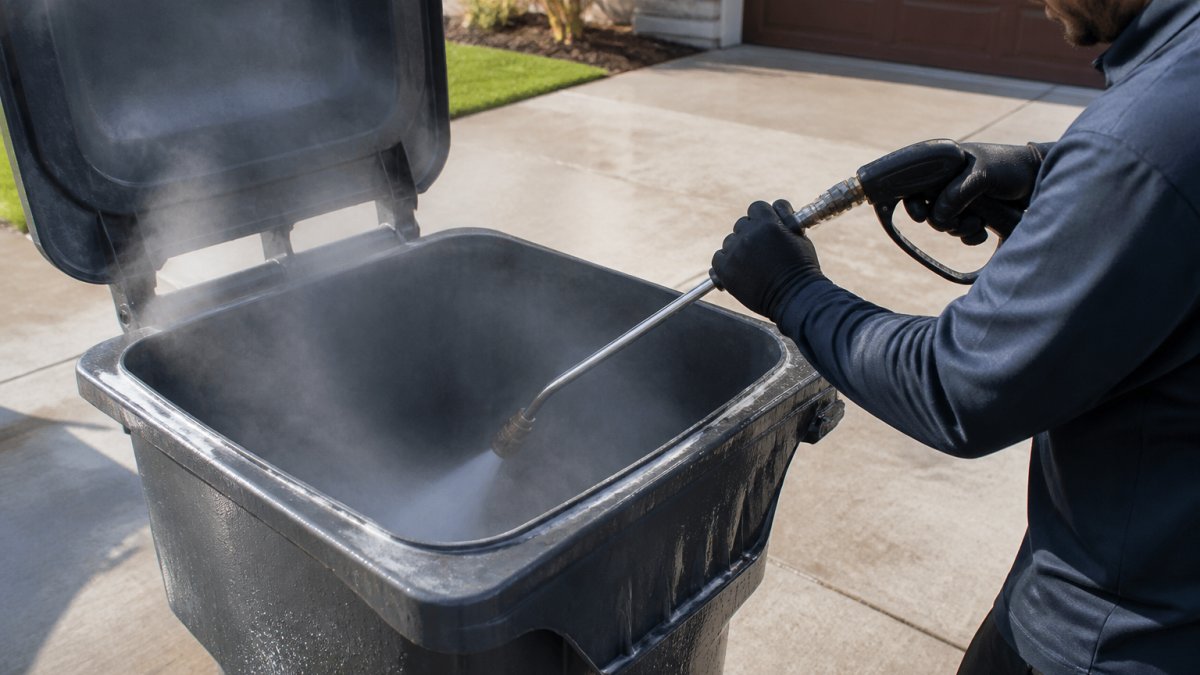
Hot-water washing is the key differentiator.
A proper clean-and-fresh result involves three steps:
- Empty and rinse to remove loose debris.
- Hot-water wash under pressure to strip residue from walls and the base.
- Disinfect and deodorize so the bin dries clean rather than damp and smelly.
If a provider skips the disinfection step, expect the odor to return within days.
Residential and Commercial Bin Cleaning in San Diego County
Residential and commercial bin cleaning in San Diego County cover two very different jobs. Residential service handles standard household trash, recycling, and green waste bins, while commercial and HOA service takes on larger shared containers and dumpster areas.
For homeowners, the appeal is simple: no more scrubbing bins in the driveway, no lingering odor in the garage, and fewer pests.
For HOAs and commercial properties, the stakes are higher. Shared dumpster areas are a common source of complaints, and a professional cleaning schedule keeps those areas sanitary and presentable. Commercial-sized bins need heavier equipment and more water than a curbside residential job.
HOA boards and property managers dealing with recurring odor complaints at shared dumpster areas, where a scheduled commercial cleaning program solves the problem at the source.
How to Compare and Book a Local Provider
Most guides list providers and stop there. A transparent comparison means lining up the same criteria across every provider you are considering, so the differences show up on one page instead of across five websites.
Build a Side-by-Side Comparison
Use the same four columns for every provider you evaluate. Fill them in before you call, then confirm by phone.
| Criterion | What to Record | Why It Matters |
|---|---|---|
| Coverage | Which cities or ZIP codes the provider serves | Confirms they will actually come to your address |
| Cleaning method | Hot water, pressure level, and whether wastewater is captured | Determines whether the bin is sanitized or just rinsed |
| Plan options | One-time, quarterly, monthly, and commercial | Matches the plan to your household size and waste volume |
| Booking and communication | Online sign-up, text alerts, cancellation terms | Predicts how smooth the ongoing service will be |
Confirm Coverage by Area, Not by Claim
“Serving the greater metro area” is not a coverage map. Ask the provider to confirm your specific city or ZIP code before you book, and ask which day of the week they run your route. Route day matters because it determines how closely your cleaning can be timed to your collection schedule.
Understand the Service-Day Logistics
A practical checklist answers the questions most booking pages skip:
- Do bins need to be empty? Most providers clean after collection day, so the bin should be empty and accessible.
- Where should bins be left? Curbside, at the end of the driveway, or in a specified spot the driver can reach without entering a gate.
- Do you need to be home? For most curbside services, no, the truck cleans the bin where it sits.
- How are you notified? Text alerts the night before and morning of service mean you are never caught off guard.
- What happens if you miss a service day? Confirm whether the visit is rescheduled or credited.
Ask These Five Questions Before You Book
- What equipment do you use? Look for a dedicated cleaning truck with hot water and wastewater capture, not a handheld pressure washer.
- How do you handle wastewater? A responsible provider captures and disposes of runoff properly.
- What’s included in the plan? Confirm whether disinfecting and deodorizing are standard or add-ons.
- Can I cancel or change plans? Avoid providers that lock you into a long contract.
- How do you notify me before service? Text alerts the night before and morning of service mean you’re never caught off guard.
Ask each provider the same five questions in the same order. When the answers sit side by side, the differences in equipment, wastewater handling, and communication become obvious, and the cheapest quote rarely wins.
SD Stink Stoppers offers an online sign-up process completed in under three minutes, plus text alerts before every visit.
The best bin cleaning service isn’t the cheapest one. It’s the one that uses hot water, captures wastewater, disinfects properly, and communicates clearly before every visit.
Crystal Conwright, a recent SD Stink Stoppers customer, put it plainly: after calling to have her trash, recycling, and green waste bins cleaned, the team came out the very next day, and she was amazed at how fresh the bins smelled afterward.
Frequently Asked Questions
How much does professional bin cleaning cost in San Diego?
Pricing for bin cleaning services in San Diego depends on the number of bins, the frequency you choose (one-time, quarterly, or monthly), and whether the bins are residential or commercial-sized. Most providers quote per bin, so a household with three carts pays more than a single-bin account. SD Stink Stoppers does not publish flat rates because every property is different, so request a quote on their website for current pricing.
How often should trash bins be professionally cleaned?
Most San Diego households do well with quarterly cleaning, which keeps odor and pests from building up between seasons. If you have young children, pets, or a hot garage where bins sit, monthly service is a better fit because bacteria and smell return faster. Commercial dumpsters in HOA communities often need monthly or bi-weekly attention. SD Stink Stoppers offers both quarterly and monthly plans so you can match the schedule to your household size.
Do bin cleaning services actually remove odors and bacteria, or just cover them up?
A proper cleaning uses hot water and pressure to scrub the interior walls and bottom of the bin, then flushes the wastewater away. That removes the residue that feeds bacteria and causes odor. SD Stink Stoppers uses specialized equipment that reaches 200 degrees during the cleaning cycle, leaving bins disinfected and deodorized. If a provider only sprays a fragrance, the smell returns within days, so ask about water temperature and wastewater handling before you book.
What should I look for when comparing bin cleaning services in San Diego?
Check four things: whether the provider is licensed and insured, what water temperature and cleaning method they use, how they handle wastewater runoff, and whether they offer recurring plans with text alerts. SD Stink Stoppers is licensed and insured, sends text alerts the night before and morning of service, and has a 5.0 rating from Google reviews. Sign-up takes under three minutes online.
Persistent bin odor, maggots, and pest problems rarely fix themselves, and a garden hose won’t reach the bacteria embedded in the plastic. SD Stink Stoppers uses specialized sanitation equipment that reaches 200° during the cleaning cycle, leaves every bin disinfected and deodorized, and backs it with flexible quarterly and monthly plans plus text alerts before each visit. Get started with SD Stink Stoppers and book a cleaning that leaves your bins genuinely fresh, not just less smelly.