Table of Contents
- Why Your Trash Bin Smells and What Actually Causes It
- How to Clean a Trash Can: Step-by-Step Deep Cleaning
- Trash Can Deodorizer Options That Work
- How Often to Clean Trash Cans (Indoor and Outdoor)
- How to Keep Outdoor Garbage Cans from Smelling
- Troubleshooting Persistent Odors and Pest Problems
- When DIY Cleaning Isn’t Enough: Professional Bin Sanitation
- Frequently Asked Questions
Last Updated: October 6, 2026
Why Your Trash Bin Smells and What Actually Causes It
Trash bin smell comes from bacteria breaking down food waste and liquids, not from the trash itself. When organic scraps sit in a warm, dark bin, microbes multiply fast and release gases that create that sour, rotten odor.
Most people blame the bag. The bag is rarely the problem.
The real issue is what leaks underneath it. A small tear in a liner lets rotting liquids seep into the plastic, where bacteria settle into scratches and seams. Once that happens, no amount of air freshener will fix it. You have to remove the source.
The Role of Food Waste, Liquids, and Bacteria
Bacteria need three things to thrive: moisture, warmth, and food. A kitchen bin in summer offers all three.
Here is what feeds the problem:
- Meat scraps and dairy, which break down quickly
- Coffee grounds, which stay damp and harbor mold
- Rotting liquids, often called garbage juice, that pool at the bottom
- Pet waste and used diapers from a diaper pail
- Sugary drink residue left in cans and bottles
That liquid layer is the worst offender. It soaks into every scratch and creates a film that keeps producing odor long after you toss the bag.
Never mix bleach with ammonia-based cleaners. The combination releases toxic gas. If you use bleach, rinse the bin completely before trying anything else.
How to Clean a Trash Can: Step-by-Step Deep Cleaning
A proper deep clean takes about 20 minutes and removes the bacteria causing the smell, not just the scent.
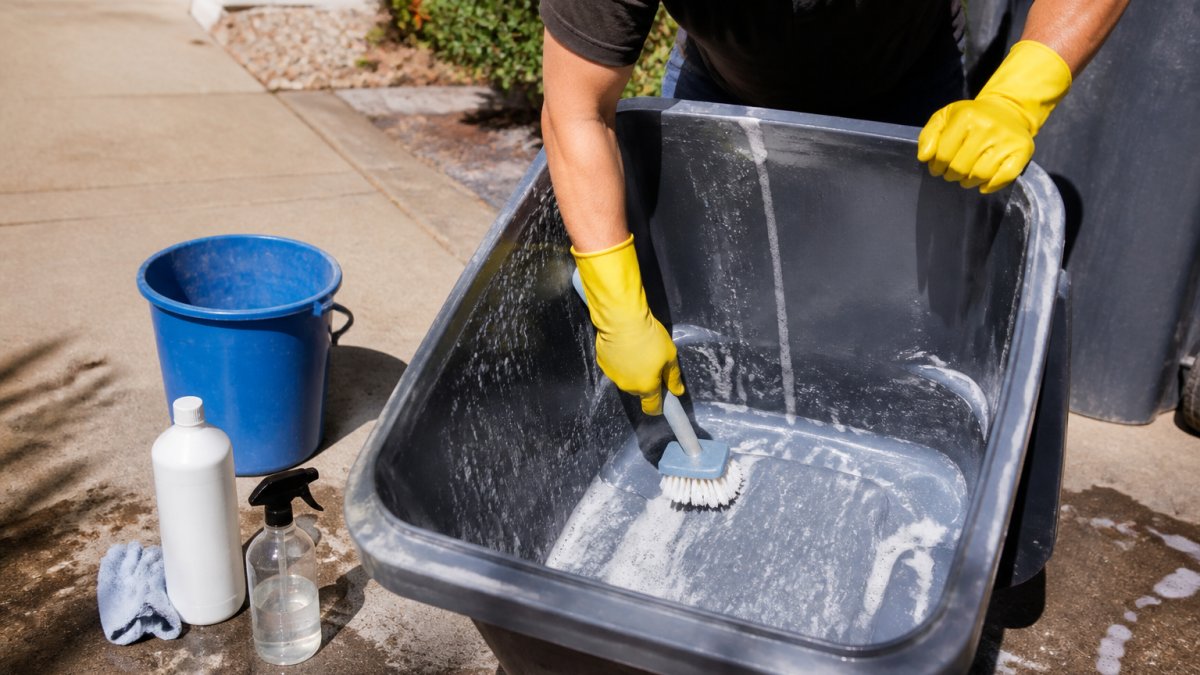
What you’ll need:
- Rubber gloves
- Dish soap
- A stiff scrub brush
- A hose or outdoor spigot
- White vinegar
- Baking soda
- Paper towels or a clean rag
Step 1: Empty and inspect. Pull the bag and check the bottom for leaks. Look for cracks, sticky patches, and dried residue.
Step 2: Rinse first. Spray the inside with water to loosen grime. Skip this and you’ll just smear the mess around.
Step 3: Scrub with soapy water. Mix warm water with a few drops of dish soap. Scrub the walls, base, and lid with your brush.
Step 4: Tackle stuck spots. Sprinkle baking soda on stubborn residue and add a splash of vinegar. Let it fizz for a minute, then scrub.
Step 5: Rinse and check. Rinse until the water runs clear. Run your hand along the inside. If it feels slick, scrub again.
Step 6: Dry completely. This step matters most. Set the bin upside down in the sun. Any trapped moisture invites bacteria right back.
Indoor vs. Outdoor Bin Cleaning
Indoor bins need gentler handling. Most are plastic and scratch easily, so use a soft brush and mild soap. Skip harsh abrasives that dull the surface and create hiding spots for bacteria.
Outdoor bins can take more pressure. A hose, a stronger scrub, and a full rinse work fine. The trade-off is that outdoor bins face heat, rain, and pests, so they need cleaning more often.
Removing Stuck-On Residue and Garbage Juice
Dried garbage juice behaves like glue. The fix is soaking, not scrubbing harder.
Fill the bin with warm water and a cup of vinegar. Let it sit for 15 minutes. The acid breaks down the sticky film so it wipes away. For a stubborn patch, make a paste of baking soda and water, spread it on, and let it sit before rinsing.
Trash Can Deodorizer Options That Work
The best trash can deodorizer absorbs or neutralizes odor at the source instead of masking it. Powders and moisture absorbers outperform sprays because they keep working between cleanings. The gap most guides skip is the trade-off: how long each option lasts, what it actually does to bacteria, and what it costs per month. Here is how the common household options stack up on those terms.
| Deodorizer | Mechanism | Typical Duration | Rough Cost | Best For | Limitation |
|---|---|---|---|---|---|
| Baking soda | Neutralizes acidic odor compounds and absorbs moisture | About 1 week per application | A few dollars per box; pennies per use | Everyday kitchen bins | Needs replacing each bag change; cakes when wet |
| Dryer sheets | Adds fragrance; light moisture pickup | 3 to 7 days | Pennies per sheet | Small indoor bins, bathroom bins | Masks odor, does not kill bacteria |
| Plain clay cat litter | Pulls liquid into the base before it pools | 1 to 2 weeks | Low per pound | Bottom of outdoor bins | Heavy, messy to remove; can turn to sludge |
| Deodorizing granules | Absorb liquid and slow bacterial growth | 2 to 4 weeks | Mid-range | High-use kitchen and outdoor bins | Requires regular topping up |
| Activated charcoal | Adsorbs odor molecules onto its surface | 2 to 4 weeks, longer if kept dry | Mid-range | Sealed or small bins | Loses effectiveness once saturated; no moisture control |
| Essential oils | Adds scent only | A few days | Varies widely | Freshening after cleaning | No odor-killing power alone |
Cost figures above are typical retail ranges, not quotes; prices vary by brand and package size.
Baking Soda, Dryer Sheets, Cat Litter, and Granules
Baking soda is the workhorse. Sprinkle a thin layer in the bottom before you add a bag. It soaks up drips and neutralizes the acids that cause sour smells.
Dryer sheets are the quick fix. Tuck one under the bag or tape it to the lid. They add a clean scent, but they do not stop bacteria.
Cat litter works as an odor absorber for outdoor bins. A shallow layer in the base traps liquid before it pools. Plain, unscented clay litter works best; scented varieties just layer fragrance over the problem.
Deodorizing granules are the strongest option for busy households. They absorb moisture and slow the bacteria that cause foul odors. They need topping up every couple of weeks, so factor that into the cost.
Activated charcoal is worth knowing about if you want an odor absorber that does not add scent. It works by adsorption, meaning odor molecules stick to its surface (the EPA).
Essential Oils and Fragrance: What to Expect
Essential oils make a bin smell better. They do not make it clean.
A few drops on a cotton ball, tucked in the bottom of the bin, add a light scent for days. Tea tree and lavender are common picks. But oil sits on top of bacteria. If the bin still has residue, the smell returns as soon as the fragrance fades.
Treat oils as the last step after cleaning, never as a substitute for it. If you want a fragrance-free option, skip oils entirely and rely on baking soda or charcoal.
Add the cotton ball after the bin is fully dry. A damp bin makes the oil evaporate faster and can grow mold around the cotton.
Choosing Between Them
Match the option to the problem. If the bin smells sour but stays dry, baking soda or charcoal is enough. If liquid pools in the base, you need a moisture absorber like cat litter or granules. If the smell returns within a day of cleaning, no deodorizer will fix it, the residue is still there and you need to deep clean again.
How Often to Clean Trash Cans (Indoor and Outdoor)
Most households should deep clean indoor bins monthly and outdoor bins every two to four weeks, more often in summer. Frequency depends on what you throw away and how hot it gets.
Use this as a starting schedule:
- Kitchen bin: every 2 to 4 weeks
- Bathroom bin: monthly
- Diaper pail: weekly
- Recycling bin: monthly, since residue still builds up
- Outdoor garbage bin: every 2 weeks in warm months, monthly in cool ones
If you notice flies or a smell that lingers after cleaning, shorten the gap. Odor is a signal, not a set schedule.
How to Keep Outdoor Garbage Cans from Smelling
Keeping outdoor garbage cans from smelling comes down to managing moisture and heat. Those two factors drive bacteria, and outdoor bins get plenty of both.
Start with these habits:
- Bag everything before it goes in, especially food
- Never pour liquid into the bin
- Keep the lid closed to block rain and pests
- Store bins in shade when you can
- Rinse the bin after a messy pickup
- Let it dry fully before the next bag goes in
A quick rinse every week goes a long way. So does a layer of baking soda or cat litter at the base.
Outdoor odor control is mostly about water. If the bin stays dry and shaded, bacteria struggle to grow. If it stays wet, no deodorizer will keep up.
Troubleshooting Persistent Odors and Pest Problems
Persistent odor after a deep clean usually means bacteria are hiding somewhere you missed. Check the lid, the rim, the handle, and any scratches or cracks in the plastic.
Common culprits:
- The lid underside, which collects condensation and drips
- The rim and hinge, where liquid pools
- Deep scratches that hold residue
- A cracked base that traps liquid underneath
Flies and maggots point to exposed food waste. Wrap scraps tightly, clean more often, and check for leaks. If maggots appear, empty the bin, scrub it with hot soapy water, and let it dry in direct sun.
For a smell that keeps coming back, try this sequence:
- Soak the bin with vinegar and water for 30 minutes
- Scrub every surface, including the lid
- Rinse until clear
- Dry in full sun
- Add a fresh layer of baking soda
If the odor survives all of that, the plastic itself may be holding bacteria in old scratches. At that point, a new bin is often the simplest fix.
When DIY Cleaning Isn’t Enough: Professional Bin Sanitation
Some odors need more than soap and a hose. Deep-set bacteria, heavy pest problems, and hot weather can outpace any home routine. That’s where professional bin sanitation helps.
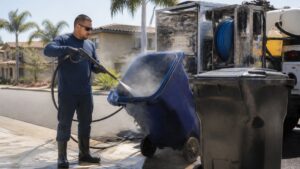
At SD Stink Stoppers, we clean, disinfect, and deodorize waste bins using specialized equipment that reaches 200° during the cleaning cycle. That heat kills the bacteria and odor-causing organisms a garden hose can’t touch.
Our service fits households of every size, with quarterly and monthly plans to match your needs.
For HOA communities dealing with dumpster-area complaints, we handle commercial-sized containers too. And if you need an emergency cleaning, we work to get out same-day.
One customer, Crystal Conwright, put it simply: after we cleaned her trash, recycling, and green waste bins, she was amazed how fresh they smelled, and she noted the team was polite and easy to work with.
We’re licensed and insured, and we stand behind the work.
Frequently Asked Questions
How do I get my trash bin to stop smelling?
Start by emptying the bin completely and checking for stuck food residue or liquid at the bottom. Scrub the interior with warm soapy water, rinse thoroughly, and let it dry in direct sunlight. Then add a thin layer of baking soda or deodorizing granules to absorb future odors. For persistent trash bin smell, a monthly deep clean plus a dedicated deodorizer keeps odors from returning.
What can I put in my garbage bin to make it smell better?
Baking soda sprinkled at the bottom absorbs odors. Dryer sheets or a cotton ball with a few drops of essential oil can add fragrance. Cat litter and deodorizing granules work as odor absorbers for outdoor bins. Avoid masking smells with sprays alone, because the bacteria causing the odor will remain. Combine an absorber with regular cleaning for lasting results.
How often should you clean a trash bin?
Indoor kitchen bins benefit from a quick rinse weekly and a full deep clean monthly. Outdoor bins should be cleaned every two to four weeks, or more often in warm weather when bacteria multiply faster. If you notice flies, maggots, or lingering odors after cleaning, increase frequency. Households with pets, diapers, or lots of food waste may need weekly outdoor cleaning.
How do you remove lingering odors from a trash can?
Lingering odors usually mean bacteria are trapped in scratches or the lid hinge. Scrub all surfaces including the lid and wheels, then disinfect with a diluted bleach solution or white vinegar. Let the bin dry completely in the sun. If odor persists, soak it with a baking soda paste for 30 minutes before rinsing. For severe cases, professional sanitation reaches areas a garden hose cannot.
Odor in your bins is a bacteria problem, and it comes back the moment conditions are right. If you’ve scrubbed, soaked, and still can’t shake the smell, it’s time to bring in equipment that reaches what a hose can’t. SD Stink Stoppers disinfects and deodorizes your bins with 200° cleaning, flexible monthly or quarterly plans, and text alerts so you never miss a service. Get started with SD Stink Stoppers and keep your bins fresh all year.